Common Data Destruction Mistakes Businesses Make and How to Avoid Them
Data breaches don’t always start with hackers.
Sometimes they begin with an old hard drive sitting in storage. Sometimes they start with boxes of outdated records waiting to be discarded. Sometimes they happen because a business assumed deleted data was truly gone.
In today’s business environment, protecting sensitive information requires more than cybersecurity. It requires a complete information destruction strategy.
At Secure Shredding and E-recycling, we help organizations eliminate data risks through secure document destruction, hard drive destruction, electronics recycling, mobile shredding, and on-going shredding programs. Understanding the most common mistakes businesses make can help prevent costly breaches, compliance violations, and reputational damage.
Protect information. Reduce liability. Strengthen compliance.
Why Proper Data Destruction Matters
Every business creates information.
Every business stores information.
Every business eventually disposes of information.
The problem occurs when disposal methods fail to eliminate the risk.
Confidential information may include:
- Customer records
- Employee files
- Financial statements
- Medical information
- Legal documents
- Passwords and login credentials
- Hard drive data
- Retired electronic devices
When these materials are improperly discarded, businesses can expose themselves to unnecessary risk.
Mistake #1: Assuming Deleted Files Are Gone Forever
One of the most common misconceptions is that deleting a file permanently removes it.
In reality, deleting a file often removes only the reference to the data, not the data itself.
Even after files are deleted, experienced recovery specialists may still retrieve information using specialized tools.
Deleted does not mean destroyed. Removed does not mean unrecoverable. Erased does not mean secure.
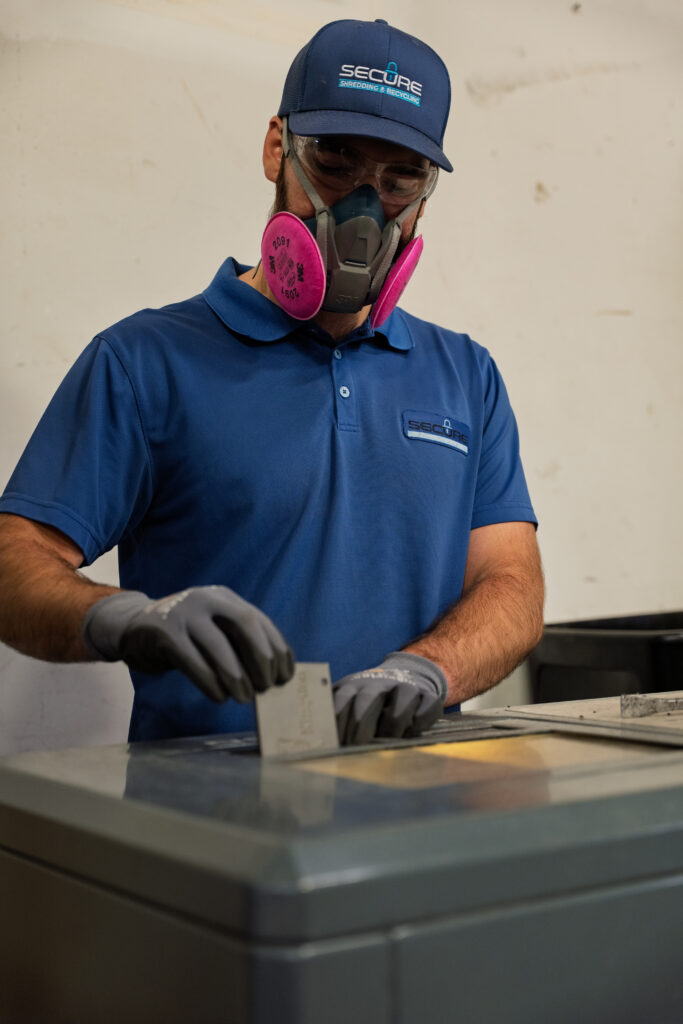
For organizations handling sensitive information, physical hard drive destruction remains one of the most secure disposal methods available.
Mistake #2: Relying on Magnets for Data Destruction
Many people still believe a household magnet can destroy digital information.
Modern storage devices are far more sophisticated.
While industrial degaussing equipment may be effective for certain magnetic media, ordinary magnets are not a reliable solution. Additionally, degaussing may not work on solid-state drives and newer storage technologies.
Businesses that rely solely on magnetic destruction may leave data vulnerable to recovery.
Mistake #3: Reformatting or Wiping Hard Drives
Reformatting and wiping can reduce the likelihood of data recovery, but they do not always eliminate risk.
Certain data recovery techniques may still recover information depending on the device, storage method, and wiping process used.
Organizations that handle regulated information often choose physical destruction because it provides greater assurance that information cannot be recovered.
Wiped drives can create uncertainty. Shredded drives create confidence.
Mistake #4: Recycling Electronics Before Data Is Destroyed
Many organizations recycle old computers, laptops, servers, printers, and storage devices without fully considering the data stored on them.
This creates a significant security risk.
Before electronic equipment enters the recycling stream, businesses should ensure all data-containing devices undergo secure hard drive destruction.
At Secure Shredding and E-recycling, our electronics recycling process begins with data security.
Common E-Waste Devices That May Contain Sensitive Data
- Desktop computers
- Laptops
- Servers
- Hard drives
- SSDs
- Smartphones
- Tablets
- Copiers
- Printers
- Backup tapes
- Network equipment
Proper electronics recycling and hard drive destruction work together to reduce both security risks and environmental impact.
Mistake #5: Using DIY Destruction Methods
We’ve seen businesses attempt to destroy hard drives using:
- Hammers
- Drills
- Saws
- Fire
- Other improvised methods
Unfortunately, partial destruction may leave recoverable data behind.
It can also create safety hazards for employees.
Professional destruction services use specialized equipment specifically designed to render storage devices unreadable and unrecoverable.
Mistake #6: Waiting Too Long to Destroy Documents
Old records often accumulate in storage rooms, file cabinets, and office closets.
The longer outdated documents remain in storage, the greater the risk of:
- Unauthorized access
- Theft
- Loss
- Accidental disclosure
Many organizations reduce this risk through on-going shredding programs.
Benefits of On-Going Shredding
- Consistent compliance
- Reduced paper clutter
- Improved workplace security
- Simplified records management
Collect securely. Shred routinely. Stay compliant.
One-Time Shredding vs. On-Going Shredding
Every business has different destruction needs.
One-Time Shredding
One-time shredding is ideal for:
- Office relocations
- Annual cleanouts
- Records retention projects
- Storage room purges
- Compliance initiatives
Purge Shredding
Purge shredding helps businesses securely destroy large quantities of outdated records during major cleanup projects.
Bulk Shredding
Bulk shredding provides efficient destruction for large-scale document disposal projects involving hundreds or thousands of pounds of paper.
On-Going Shredding
Organizations that generate confidential documents regularly often benefit from recurring service schedules and secure collection containers.
Mobile On-Site Shredding in Jacksonville
Businesses throughout Jacksonville rely on mobile shredding and on-site shredding services to securely destroy confidential documents without disrupting operations.
Our mobile shredding trucks arrive directly at your facility, allowing you to witness destruction in real time.
Jacksonville organizations commonly utilize:
- Mobile shredding
- On-site shredding
- One-time shredding
- Purge shredding
- Bulk shredding
- On-going shredding programs
Mobile On-Site Shredding in Tallahassee
Tallahassee businesses, healthcare organizations, government offices, and educational institutions trust mobile shredding services to help maintain compliance and protect confidential information.
On-site shredding in Tallahassee provides:
- Immediate destruction
- Witnessed shredding
- Secure chain of custody
- Minimal business disruption
Mobile shredding. On-site shredding. Peace of mind.
Why Professional Data Destruction Matters
Choosing a professional destruction provider helps ensure:
- Regulatory compliance
- Secure chain of custody
- Proper employee screening
- Certified destruction processes
- Certificates of Destruction
- Sustainable recycling practices
At Secure Shredding and E-recycling, we maintain NAID AAA Certification standards and provide secure destruction services designed to protect sensitive information throughout its lifecycle.
Areas We Serve
Secure Shredding and E-recycling proudly serves businesses throughout the Southeast and Texas.
Louisiana
Baton Rouge, New Orleans, Lafayette, Lake Charles, Alexandria, Hammond, Houma, Monroe, Shreveport, and surrounding areas.
Florida
Jacksonville, Tallahassee, Orlando, Tampa, St. Petersburg, Gainesville, Pensacola, Panama City, and nearby communities.
Texas
Houston, Dallas-Fort Worth, Austin, San Antonio, New Braunfels, Tyler, Longview, Sulphur Springs, and surrounding markets.
Alabama
Birmingham, Huntsville, Mobile, Montgomery, Tuscaloosa, and surrounding communities.
Mississippi
Jackson, Gulfport, Biloxi, Hattiesburg, and communities throughout the state.
Tennessee
Nashville and surrounding regions.
Whether you need mobile shredding in Jacksonville, on-site shredding in Tallahassee, bulk shredding in Houston, or hard drive destruction in Birmingham, our team delivers secure, compliant solutions backed by industry-leading standards.
Why Businesses Choose Secure Shredding and E-recycling
Organizations trust Secure Shredding and E-recycling because we provide:
- On-site shredding
- Mobile shredding
- One-time shredding
- Purge shredding
- Bulk shredding
- On-going shredding
- Hard drive destruction
- Electronics recycling
- Secure collection containers
- Certificate of Destruction documentation
Secure destruction. Responsible recycling. Proven protection.
Frequently Asked Questions
Is deleting files enough before recycling a computer?
No. Deleted files can often be recovered. Professional hard drive destruction provides a much higher level of security.
What is the safest way to destroy a hard drive?
Physical hard drive destruction is widely recognized as one of the most secure methods because it makes data recovery virtually impossible.
Do businesses in Jacksonville use mobile shredding services?
Yes. Many Jacksonville businesses utilize mobile shredding and on-site shredding services for secure document destruction and compliance support.
How often should businesses schedule shredding services?
Organizations that regularly generate confidential information often benefit from monthly, biweekly, or weekly on-going shredding programs.
Can electronics recycling help prevent data breaches?
Yes, when combined with proper hard drive destruction. Secure electronics recycling ensures retired devices are processed safely while protecting sensitive information.
Protect Your Business Before a Problem Occurs
The best time to prevent a data breach is before information leaves your control.
Whether you need hard drive destruction, electronics recycling, one-time shredding, bulk shredding, purge shredding, or an on-going shredding program, Secure Shredding and E-recycling can help.
Call Us Today! 1-(833) 747-3399
Or contact us online to request a free quote and build a secure information destruction program for your organization.


